
Ag Fás ~ Growing
Irish language prose writing in Ireland

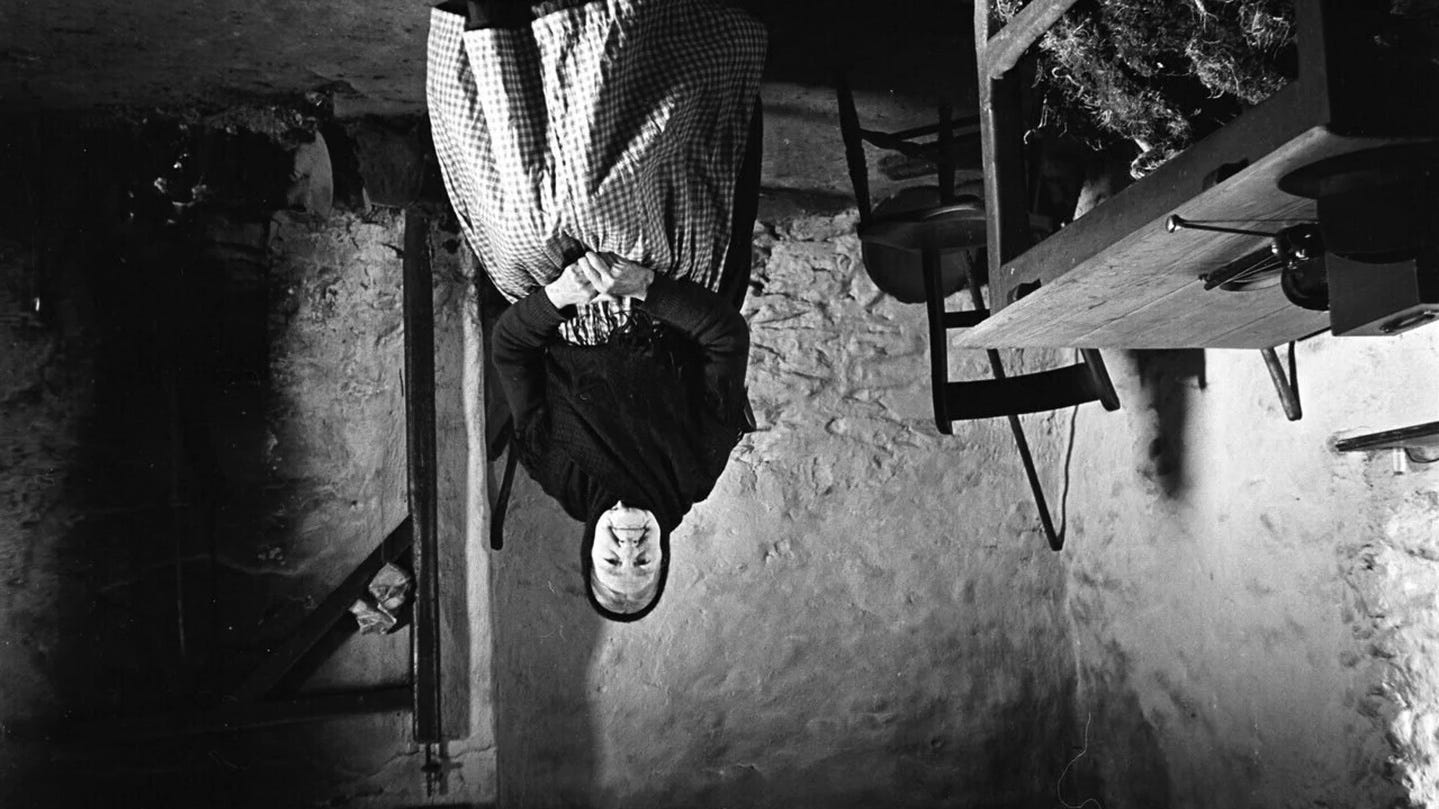
My mother Ann initially trained as a theatre nurse and then went on to pursue a career as a transatlantic airhostess in the 1960’s; something that was then considered quite glamorous. I am the eldest of four sons she bore after she married in the early 1970’s, when she had to give up her career, as was required of all married women in Ireland at the time.
While raising us, she wasn’t content with just domesticity (thought there was plenty of that) and she started off a coffee shop, delicatessen and flower shop in Clonakilty in the 70’s that was really quite revolutionary for the time. Tea and hang sangwiches were the norm; coffee, cheese and salami were wildly exotic.
Then she decided she wanted to study law. She started this by night in University College Cork the year I received my first communion, which would have been around age 7, say 1979. This would have required a two hour return trip to the city every evening. She qualified as a solicitor the year I received my confirmation, around age 12, say 1984.
She did this while there were four of us from 7 down to 1 in 1979; 12 down to 6 by 1984.
And before you begin to wonder, this was the 1970s and 80s, and while my father is a great guy, he was entirely typical of his generation and his era, and she ended up carrying pretty much everything on the domestic front while she did it all.
It really was an incredible achievement looking back on it now.
In order to qualify as a solicitor, my mother would have had to pass an Irish language entrance exam for the solicitor’s professional qualification in the Law Society at Blackhall Place in Dublin at the time.
And I have quite a vivid memory of my mother spending a lot of time working on the book Fiche Bliain ag Fás at the time in preparation for the exam.
My maternal grandfather would have always have been very encouraging of Irish, but it wasn’t something my mother had ever taken to, and the Irish exam was a chore she simply had to get done to get on with it.
But the book remains a vivid motif of that period, and the work she put in during it, in my mind; and I’ve since acquired a copy.
Fiche Bliain ag Fás ~ Twenty Years a Growing by Muiris Ó Súilleabháin is an account of the author’s life growing up on the Blasket Islands off the west Kerry coast written in the 1930s.
The title comes from the proverbial:
Fiche bliain ag fás.
~ Twenty years a growing.
Fiche bliain faoi bhláth.
~ Twenty years in bloom.
Fiche bliain ag cromadh.
~ Twenty years declining.
Fiche bliain gur cuma ann nó as.
~ Twenty years when it doesn’t matter whether you’re there or not.
It forms part of a rich tradition of writing in the Irish language from the Blasket Islands in the west Kerry Gaeltacht from the early 20th century; beginning with Tomás Ó Criomthain’s An tOileánach ~ The Islander in the 1920’s, including Ó Súilleabháin’s book, and of course Peig Sayers’s, eponymous work: Peig.
These were followed by the likes of Seosamh MacGrianna’s Mo Bhealach Féin ~ My Own Way in 1940 and Micí Mac Gabhann’s Rotha Mór an tSaoil ~ The Big Wheel of Life in 1959, both from the Donegal Gaeltacht.
So, the tradition of Irish prose writing was a very strong one from when the Irish language revival movement started to gain traction at the turn of the 20th century onwards. However, the predominant works in the field at the time were accounts of traditional life in the Gaeltacht.
This in turn led Brian O’Nolan, aka Flann O’Brien, aka Myles na gCopaleen, to write and publish his satirical masterpiece An Béal Bocht ~ The Poor Mouth in 1941. An Béal Bocht is a hilarious book, particularly when viewed in the context of the other works it is referencing.
While it may seem, at first glance, a devastating satire of the likes of An tOileánach, I believe that O’Nolan was, in fact, a great admirer of the latter work, and others in that field. What he was really lampooning in An Béal Bocht was the poverty that was allowed to persist in those remote Gaeltacht communities, communities held up by some in power as exemplars of what real Gael’s should aspire to being, while the children of those who actually had to live in those communities were faced with little option other than emigration if they wanted to have any lives for themselves.
For those living their lives through English in Ireland, this traditional cohort of Irish language writers, and the satire that references them all, are often seen as the beginning and end of what prose writing in the Irish language is entirely comprised of; the reality is, of course, far richer and more sophisticated.
There are more prose writers writing in Irish today than at any time in the past, and their output is extraordinarily prolific, varied, and of extremely high quality.
And yet, in an article to celebrate International Women’s Day in the Irish Times in 2023, when referencing Irish women prose writers, the only woman they could come up with was Peig Sayers. The irony of this, or, to be more precise, the ignorance that it demonstrates, is extraordinary.
To begin with, Peig Sayer was not a writer; she could neither read nor write. She was a master storyteller and the story of her life that we know as Peig was documented from her oral recitations by her son Mícheál Ó Guithín, aka Maidhc File.
But what is more breathtaking about this is that Peig died in 1958, and in the intervening 65-odd years over the second half of the twentieth century and the first quarter of the twenty first, the Irish Times could not come up with any other female Irish language prose writer of note to mention.
Similarly, in 2025, the Irish Times published a list of the Best 100 Irish Books of the 21st Century, to mark the first quarter of that century. No works in the Irish language were included.
So, if you were an person living your life through English in Ireland, and relying on the English language media in Ireland in the 21st Century to inform your view of the world, you would have little way of knowing that modern Irish language writing, and modern Irish language writers, exist at all; other than as an historical phenomenon recording rural Gaeltacht life in the first part of the last century.
When the diametric opposite is, in fact, the case.
P.S. This is Day 13 in a 21-Day series on The Irish Language and Its Role in Irish Identity; you can start at Day 1 here or read Day 14 here.